

Hey friend,
Welcome back to the Primal Question Newsletter.
If this is your first time reading, subscribe here to receive future posts. If this edition is helpful, use this link to share it with someone else who might benefit!
Alright, this might sting, but I think you need to hear it.
If you’re someone who wants to help people—whether you’re a coach, a pastor, a leader, a parent, or just a friend who cares—there’s a trap that’s easy to fall into. It looks like kindness. It feels like love. But it’s actually hurting the very people you’re trying to serve.
I’m talking about people pleasing.
Now, before you brush this off and think, “That’s not me. I’m not a people pleaser.” Let me tell you how it showed up in my own life because it’s more subtle than it might seem.
As a Q1 (someone whose Primal Question is “Am I safe?”, I developed some pretty sophisticated coping mechanisms over the years. One of them was codependency, making sure everyone around me was happy so I could feel okay. If there was conflict in the room, I felt it in my body like a threat. I learned to smooth things over, to say what people wanted to hear, to never rock the boat. I told myself I was being kind. I told myself I was being a good friend, a good coach, a good husband. I told myself I was keeping the peace.
But here’s what I finally had to admit:
I wasn’t doing any of that for them. I was doing it for me.
People pleasing is a strategy to avoid external conflict in order to protect internal peace.
Read that again, because it’s important.
When we people please, we’re not actually serving the other person. We’re serving our own need to feel safe, or loved, or good enough, or whatever our Primal Question happens to be. It’s a scramble behavior dressed up in church clothes, and like all scramble behaviors, it stems from Kid Logic.
Think about it.
Somewhere along the way, most of us learned that if we just made everyone else happy, we’d be okay.
Maybe you learned that being agreeable kept you safe from an angry parent’s rage storm.
Maybe you learned that protecting everyone else’s emotions earned you the love you longed for.
Maybe you learned that never having an opinion of your own meant you’d never be criticized or rejected or made fun of.
These were brilliant survival strategies for a child.
The problem is, we’re not children anymore. And when we keep using Kid Logic to navigate adult relationships, it costs us. It costs us our voice, our authenticity, our impact. It’s a lose-lose situation. Not only do we abandon ourselves, but we’re actually hindering the people we think we’re helping.
Here’s what I mean.
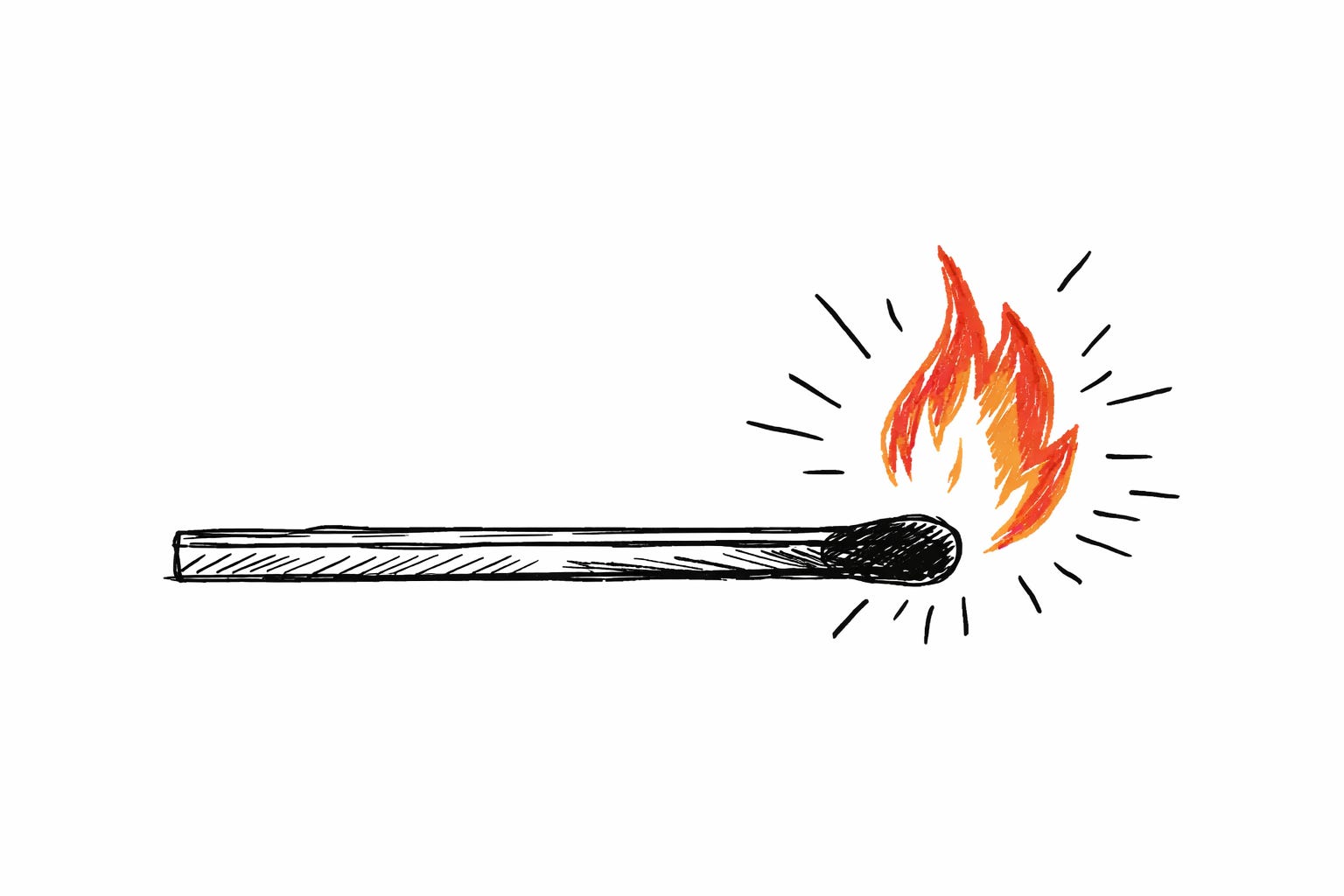
I like to think of every person as a match.
That little wooden stick is loaded with potential energy.
It has the capacity to light a single candle on a birthday cake or spark a thousand-acre forest fire. It could ignite the pilot light that heats a home or start the bonfire that brings an entire community together. But here’s the thing about potential energy—it stays potential until something activates it.
You know what activates a match? Friction.
If all you do is compliment the match, encourage the match, tell the match how much potential it has, nothing happens. The match sits there in its comfortable match box, full of energy that never gets released. But when you strike it against something rough, when you create a little bit of friction, suddenly all that potential energy becomes kinetic energy. The match ignites. It becomes what it was always capable of being.
People are the same way.
People often need to encounter a little bit of friction, a little bit of truth, to activate their potential.
That’s why people pleasing is such a big problem. When we’re so focused on being liked, on avoiding discomfort, on making sure no one gets upset with us, we rob people of the friction they need to grow. We leave them full of potential energy that never gets activated into kinetic energy. This is true in client relationships, and this is true with friends and family.
True service, true love, true advocacy, requires caring more about someone’s transformation than their temporary comfort.
How do you start breaking free from people pleasing?
A couple of quick notes.
First, you have to acknowledge that people pleasing is not actually about being nice.
Recognize it for what it is. It’s about protection. It’s your wounded inner child trying to make sure you’ll be okay. When you feel that familiar pull to smooth things over, to avoid the hard conversation, to tell someone what they want to hear instead of what they need to hear, pause and ask yourself: What am I protecting right now?
What Primal Question am I trying to get answered with a yes? And how can I stay grounded in the truth, so I can truly serve this person instead of trying to protect my own internal peace?
Second, you have to decide that serving people matters more than being liked by them.
This is a fundamental shift. People pleasers are hooked on approval the way others are hooked on substances. It’s a real addiction, and breaking it requires making a different choice over and over again until the new pattern takes hold. Whether you’re sitting across from a paying client or your own kid at the dinner table, the question is the same: Am I willing to risk their disapproval for the sake of their growth?
Third, give yourself permission to create friction.
Not because you enjoy conflict—most of us don’t—but because you understand that friction is how potential becomes reality. The people in your life don’t need another cheerleader. They need someone who cares enough to strike the match.
Here’s the last thing I’ll say…
I hate to say this (probably because I want you to like me), but it’s true.
If you want to have impact, if you want to have transformational conversations with clients, if you want to really leave a dent in the universe, people pleasing is going to keep you from getting there. You must rid yourself of people pleasing if you want to accomplish anything worthwhile in life. That might sound dramatic. But I’ve seen it too many times—talented people with so much to offer, held back by their addiction to approval. They never say the hard thing. They never create the friction. And the people around them stay stuck.
Let’s be people who lovingly ignite others into their full potential.
Let’s be people who care enough to strike the match.
Warmly,
Mike Foster
P.S. Was this helpful?
If so, don’t click away without giving this post a like, comment, or share! Your engagement helps other people discover their Primal Question. Thank you so much for reading. I appreciate you!
P.P.S. Our second cohort of Primal Question PRO is off to a phenomenal start.
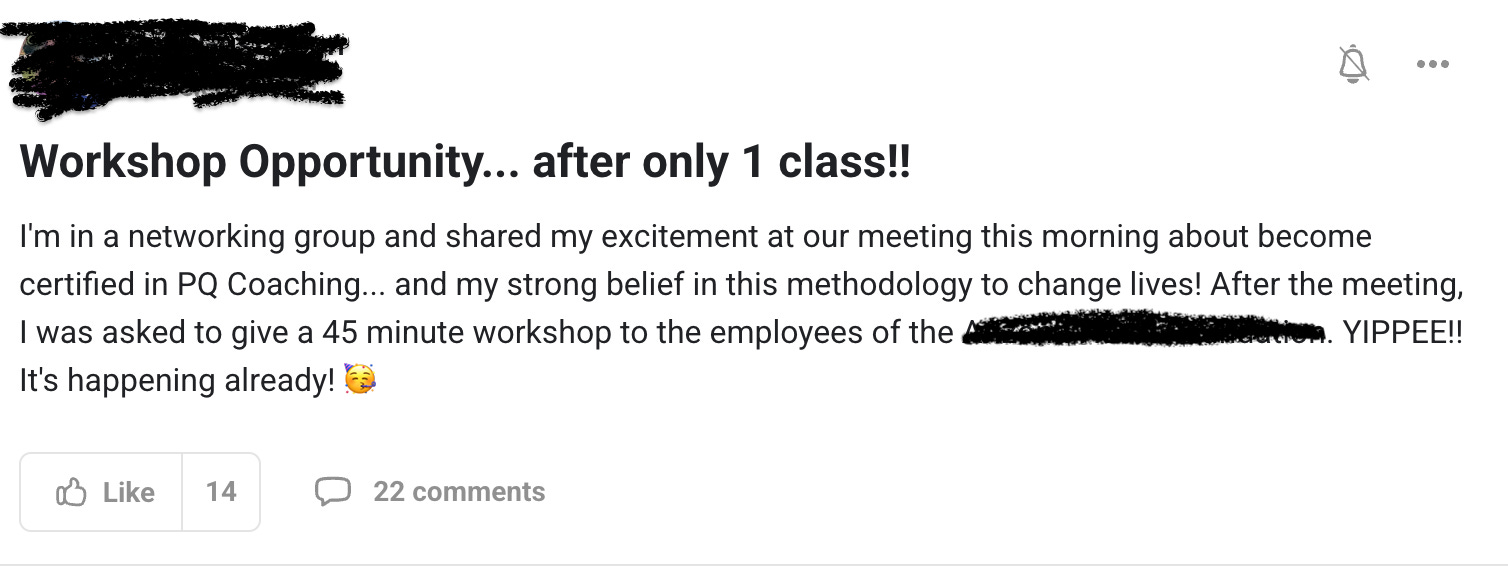
One coach already created a workshop opportunity after the first class! If you’re interested in joining a future cohort, join the waitlist by filling out this form. By the way, since both cohorts have sold out in less than 24 hours, I am thinking about doing even more cohorts throughout the year. Joining the waitlist will help me gauge how much interest there is, so add your name if you haven’t yet!
Best article since I subscribed
Thank you
I’m wondering about the tension between serving God and loving others and people pleasing
Thanks for the article